

Five teams of scientists are receiving a total of $100,000 to pursue projects that integrate transformative scientific discovery with science education as part of Research Corporation for Science Advancement’s Cottrell Scholars Collaborative.
The projects address different needs: bringing more scientific speakers to institutions with limited travel budgets, removing barriers embedded in academic culture, helping researchers become better mentors, giving faculty a place to exchange thoughtful uses of artificial intelligence, and strengthening scientists’ engagement with policymakers. Their common approach is to gather ideas from peers, test them in practice and share what works, turning the turn experience from across the community into resources other scientists and educators can use.
“The Cottrell Scholars Collaborative works because it allows scientists to promote, develop, and implement the integration of transformative scientific discovery with teaching,” said Eric D. Isaacs, president and CEO of RCSA. “These five teams are turning ideas that started at RCSA’s annual Cottrell Scholars Conference into resources that can be shared broadly throughout the science ecosystem, which is exactly the kind of discovery and community-building we want to support.”
Expanding the reach of visiting scientists
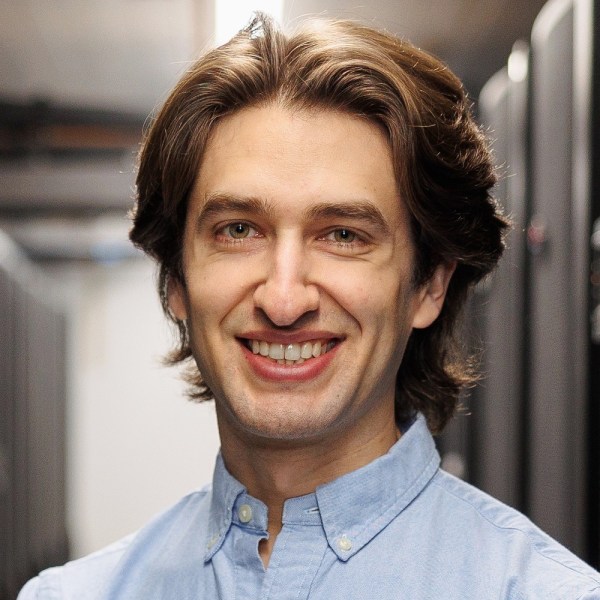
Matthew Caplan of Illinois State University will lead “Cottrell Lectureships: Scaling Speaker-Sharing and Infrastructure to Sustain It,” an expansion of a collaborative that has supported 12 speaker-sharing visits since 2024. The model pairs faculty at a major research university with colleagues at nearby predominantly undergraduate institutions or small liberal arts colleges. Together, they invite a Cottrell Scholar to speak at both campuses during one trip.
The new award will allow the team to continue supporting lectureships while building the infrastructure needed to sustain and broaden the program. A website will document past visits and include an opt-in directory, map, and tracking tools to help faculty identify potential regional partners. The team expects the visits to expose students to new areas of research, connect faculty across neighboring institutions, and make better use of academic travel time and funds.
Designing a STEM culture that includes more ways to participate
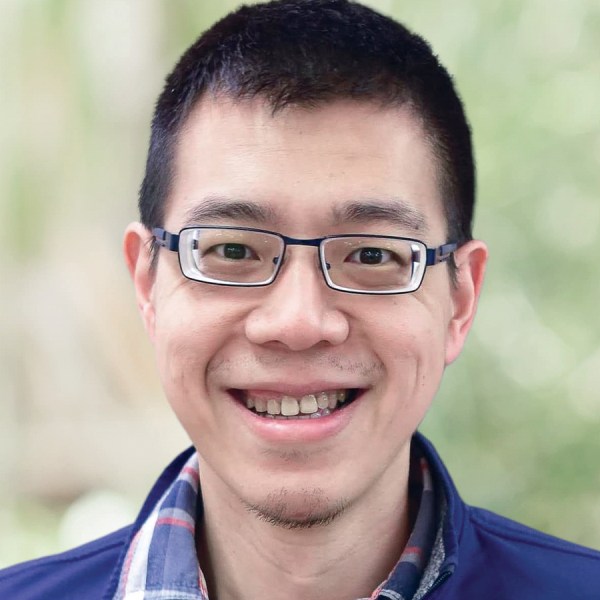
Yao-Yuan Mao of the University of Utah will lead “RESET: Building a STEM Culture that Embraces Everyone.” The project begins with the premise that many academic practices treat one way of learning, communicating, or conducting research as the default, leaving people with disabilities and others to request individual accommodations after barriers are already in place.
The team will create a living online manual with practical steps faculty can take to challenge ableism and apply universal design in chemistry, physics, and astronomy. Its examples will examine the language used to discuss students, assumptions about how scientists must present or exchange ideas, and the design of research and educational experiences. After a writing retreat, the team plans a 2.5-day pilot workshop for about 20 members of the Cottrell Scholars community. Participants will work through realistic scenarios, test the manual and help design a workshop that can be repeated at future meetings.
Helping scientists become more intentional mentors

Anne Medling of the University of Toledo will lead “Mentoring Better: A Cottrell Scholars Collaborative Book Proposal.” The project focuses on a gap in scientific training: researchers spend years learning the tools of their fields but often receive little formal instruction in how to guide someone else through a research experience.
The team will survey Cottrell Scholars for effective practices and case studies, then use two writing workshops to develop a book for graduate students, postdoctoral researchers, junior faculty, and experienced mentors facing new challenges. Planned chapters include choosing an appropriate undergraduate research project, setting expectations, communicating effectively, fostering independence, training ethical scientists, and responding when a student is in crisis. The group is targeting a summer 2028 distribution for “Mentoring Better,” which is expected to be available in print and online.
Creating a faculty exchange for thoughtful uses of AI
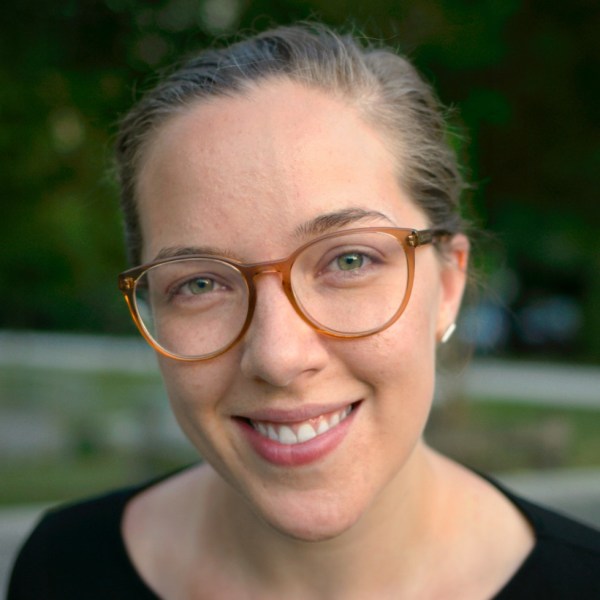
Tova Holmes of the University of Tennessee, Knoxville, will lead “Faculty AI Exchange: A community of faculty collectively navigating AI in higher education.” The project recognizes that faculty members are approaching generative AI from widely different starting points and often rely on departmental colleagues to understand how others are using—or choosing not to use—the technology.
The Faculty AI Exchange will collect and curate AI materials developed by faculty for research, teaching, and administrative work. An AI Usage Gallery will feature code-based tools and documented workflows, while a resource collection will include items such as syllabus language, research-group discussion guides, and sample assignments. The team will add ways for faculty to report how they adapted a resource, discuss the reasoning behind their choices, and build on one another’s work. A workshop and virtual implementation seminars will help the group assess the collection and guide its growth.
Building sustained relationships between scientists and policymakers

Rigoberto Hernandez of Johns Hopkins University will lead “Community of Practice for Engagement, Advising, and Advocacy.” The project will bring together an initial cohort of 10 to 15 Cottrell Scholars to identify effective, nonpartisan ways for scientists to build continuing relationships with state and federal policymakers.
During the first year, the group will attend a workshop to learn from people with experience in congressional offices and science advocacy, then begin a shared-practices guide for engagement, advising, and advocacy. In the second year, they will apply those practices in meetings with their representatives, revise the guidance based on what they learn, and begin recruiting a future cohort. The team also plans to share its work through the RCSA’s Cottrell Scholar network and scientific societies.
Community knowledge made useful
Each project turns the experience of Cottrell Scholars into a resource that others can adapt. The teams will use the two-year awards to build, test and revise their ideas with colleagues, then extend their reach through digital platforms, publications, workshops and communities of practice.
“What makes this cohort effective is the network behind it — Cottrell Scholars, Holland Award recipients, and Fulbright-Cottrell Scholars working across disciplines and institutions,” said Cottrell Scholars Senior Program Director Silvia Ronco. “That mix is exactly what it takes to tackle problems in diverse areas such as varied as mentoring, AI adoption, and science policy, with each team building something scientists and educators can use and benefit from right away.”
Past Cottrell Scholar Collaborative projects have built networks for faculty to support student success, started leadership training programs, published books on teaching, presented workshops on professional development, designed 3-D models for chemistry instruction and databases for physics and astronomy, and even created galaxy-themed comic books for children.
For more information on the Cottrell Scholars Collaborative, visit rescorp.org/cottrell-scholars/cottrell-scholars-collaborative/.
Stay connected to the discoveries and researchers shaping the future of science — subscribe to RCSA Horizons, a monthly newsletter of Research Corporation for Science Advancement.