
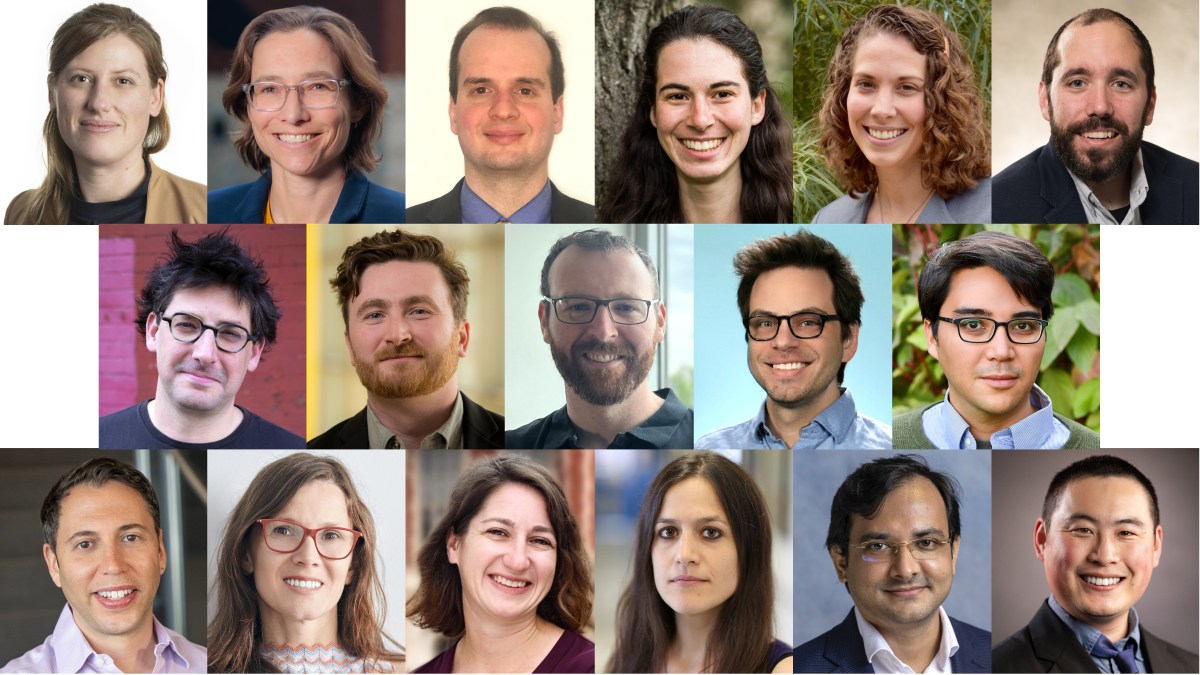
Six cross-disciplinary teams of researchers from the United States and Canada have won funding in the first year of Scialog: Neurobiology and Changing Ecosystems, a three-year initiative that aims to spark new science exploring neurobiological response to rapid and extensive human-caused environmental changes. The initiative is sponsored by Research Corporation for Science Advancement, the Paul G. Allen Frontiers Group, the Paul G. Allen Family Foundation, the Frederick Gardner Cottrell Foundation, and The Kavli Foundation.
Each of the 18 awards is for $60,000 in direct costs.
“Besides climate, other factors such as noise, light, toxins, and microplastics have an impact on organisms’ health, their ability to feed, to reproduce, and to migrate,” said RCSA Senior Program Director Andrew Feig, who leads the initiative. “Many of the changes to our natural and built environments are occurring at rates faster than traditional evolution and natural selection can respond, so it’s important to understand at a fundamental level how neural pathways are adapting to these challenges.”
Scialog is short for “science + dialog.” Created in 2010 by RCSA, the Scialog program aims to accelerate breakthroughs by building a creative network of scientists that crosses disciplinary silos, and by stimulating intensive conversation around a scientific theme of global importance.
The inaugural conference, held March 13-16 in Tucson, Arizona, engaged 50 early career chemists, physicists, climate scientists, neurobiologists, and behavioral ecologists in a series of conversations to discuss challenges and gaps in current knowledge, and to form teams to propose innovative collaborative projects based on ideas generated during the conference.
In addition to catalyzing new science, Feig said, the initiative aims to generate a networked community of researchers from colleges, universities, and research institutions in the United States and Canada who are ready to participate in larger, multistage efforts by The Kavli Foundation, the National Science Foundation, and others to fund novel research into significant issues of adaptation and resilience in the face of unprecedented environmental change.
Martin Tresguerres, Scripps Institution of Oceanography, University of California, San Diego explained how the recently created Allen Discovery Center for Neurobiology in Changing Environments is using a transdisciplinary approach combining cutting-edge genomic approaches with physiological, behavioral, and field experiments in his keynote, “Why and How We Study Neurobiology in Changing Environments: The ADC-NiCE Approach.”
He said understanding the dynamic nature of these environments is crucial for understanding mechanisms that confer neurobiological resilience or vulnerability to changing conditions, whether they are natural or human-induced.
“Environments are very variable naturally, and animals and organisms are living there,” he said, pointing out that in marine environments, this pronounced natural variability can include currents and huge swings in temperature, salinity, nutrients, pH, and oxygen levels, among many other factors.
This complexity highlights the importance of interdisciplinary collaboration and the use of advanced technologies to simulate natural environments in the lab, Tresguerres said.
“It’s difficult to know how something is going to change if you don’t know what that something is, so our first thing is to elucidate fundamental neurological mechanisms in naturally fluctuating environments.”
With a goal of creating a comprehensive framework for studying neurobiology in changing environments, center researchers have developed sensors for measuring pH, oxygen, and other parameters, allowing for precise control of environmental conditions. They have plans to develop portable apparatuses for field experiments, integrating lab and field research to study natural variability.
In the second keynote talk of the conference, “Mechanisms Underlying Resiliency to Changing Ecosystems: from Genes to Landscapes,” Christina Grozinger, Center for Pollinator Research, Penn State University, outlined her lab’s work studying the sensory, physiological, developmental, and genetic factors that may underlie the behavior variation that allow some bee species and populations to thrive while others decline.
She discussed the multiple factors contributing to bee declines, including pollution, parasites, monoculture, viruses, and climate change, and highlighted the significant losses of honeybee colonies and the threat to wild bees, with studies showing 17% of bumblebee species and 22% of other bee species threatened with extinction.
In illustrating the complex cognitive abilities required for bees to manage their social and environmental interactions, she shared findings from her lab showing that bees provided with a high-quality pollen diet are more resilient to stressors such as pesticides, parasites, and heat. She used the defense strategies of Asian honeybees against hornets as an example of how bees integrate social and internal physiological cues to respond to new threats and opportunities.
Grozinger showed off the Beescape app her team developed to help beekeepers, gardeners, growers, and land managers use data to enhance conservation efforts. It shows a “bee’s eye view” of landscape resources such as nesting habitat, availability of flowering plants by season, and risks such as pesticide use levels in selected areas.
Her team is also creating a graduate training program to help students develop nonlethal AI-enabled monitoring systems using cameras to identify and track insects. “If you’re trying to conserve them, it’s better if you don’t have to kill them,” she said.
An expert group of scientists served as Facilitators to guide discussions at the conference. Along with Tresguerres and Grozinger, they included: Carlos Baiz, University of Texas at Austin; Cindy Moss, Johns Hopkins University; Jeff Riffell, University of Washington; Kim Rosvall, Indiana University; Joellen Russell, University of Arizona; Emilie Snell-Rood, University of Minnesota Twin Cities; and Wolfgang Stein, Illinois State University.
During the conference, Fellows met in a series of small- and medium-sized breakout groups designed to maximize interaction with other scientists from other disciplines and approaches. They were challenged to identify bottlenecks to progress in the field and brainstorm potential areas of inquiry where new, cross-disciplinary research is needed.
Participants are encouraged to get to know each other and their work, and to envision what it would look like to collaborate, how they could leverage their different approaches and methods, and what novel problems they could investigate together. On the final morning, teams that came together during the previous three days made brief proposal pitches for a total of 27 projects they had brainstormed at the conference. Ninety-six percent of Fellows participated in writing proposals.
In his welcoming remarks at the conference, RCSA President & CEO Daniel Linzer acknowledged that these are challenging times for scientists but emphasized how important their work is.
He shared a passage from theologian St. Augustine (354 – 430 AD) emphasizing the eternal importance of exploring the unknown: “Without science, nobody reasons rightly. For thought is right reasoning moving from things certain to the investigation of things uncertain, and there is nothing certain in an ignorant mind.”
“Scialog is really about bringing you together to explore the unknown, to share ideas, and to take leaps into that unknown,” Linzer said. “We encourage you to set aside what’s going on outside of this and focus on the real beauty of what we all do, which is try to discover things that make a difference in our understanding of the world.”
Eric Isaacs, who will become RCSA President on July 1 upon Linzer’s retirement, said as he attended his first Scialog meeting that he was impressed by the willingness of participants from widely different fields to take risks and think about something new.
“Despite the challenges going on in the world, the work you are doing is among the most important things anyone can do right now,” he said.
The second meeting of Scialog: Neurobiology and Changing Ecosystems is scheduled for March 12-15, 2026. Applications to participate in the 2026 meeting will be considered until September 1, 2025.
The following NCE teams will receive 2025 Scialog Collaborative Innovation Awards:
Bee-ing Aware: Monitoring Honey Bee Larval Nutrition, Chemical Exposure, and Neurobiological Effects
- Ina Anreiter
Biological Sciences
University of Toronto Scarborough - Clare Rittschof
Entomology
University of Kentucky - Alexander Zestos
Chemistry
American University
From Feeding to Flux: Unraveling the Impact of Animal Behavior on Global Ocean Carbon Flow
- Mara Freilich
Earth, Environmental, and Planetary Sciences / Applied Mathematics
Brown University - Diana Rennison
Biological Sciences
University of California, San Diego - Jason Keagy
Ecosystem Science and Management
Pennsylvania State University
A Community AI Approach to Identify and Predict Behavioral Motifs Across Marine Life
- Brian DePasquale
Biomedical Engineering
Boston University - Matthew Lovett-Barron
Neurobiology
University of California, San Diego - Brandon Weissbourd
Biology
Massachusetts Institute of Technology
Comparative TRPV1 Function in Sensory Adaptability and Resilience to Global Warming
- Felipe Almeida de Pinho Ribeiro
Medicine
Washington University School of Medicine - Duncan Leitch
Integrative Biology and Physiology
University of California, Los Angeles - Eviatar Yemini
Neurobiology
University of Massachusetts Medical School
Thermal Priming and Parental Care: Investigating Conserved Neural Pathways of Parental Care Plasticity in Response to Heat
- Ioana Carcea
Pharmacology, Physiology and Neuroscience
Rutgers, The State University of New Jersey - Laura Stein
Biological Sciences
University of Oklahoma - Duncan Leitch
Integrative Biology and Physiology
University of California, Los Angeles
Understanding Nanoplastic-Nervous System Interactions within Organisms: A Multipronged Approach
- Pinar Ayata
ASRC Neuroscience Initiative
The City University of New York, CUNY - Chayan Dutta
Chemistry
Georgia State University - Zihao Ou
Physics
University of Texas at Dallas