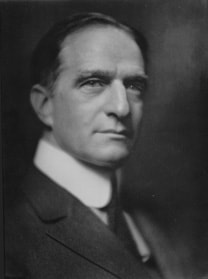
1915
Elon Huntington Hooker was born of privilege. His ancestors included signers of the Declaration of Independence and the founder of the Connecticut Colony. Hooker received degrees in engineering from both University of Rochester and Cornell, then continued his studies at Zurich Polytechnic in Switzerland and the Ecole des Ponts et Chausees (National School of Bridges and Roads) in Paris.
By age 27, Hooker had returned to the U.S. and was working in hydraulic engineering. In 1898, he served on a commission of engineers who inspected and compared the Panama and Nicaragua canal routes. The same year, then-governor Theodore Roosevelt appointed him deputy superintendent of Public Works of New York State. In his autobiography, Roosevelt wrote about: “… a Cornell graduate named Elon Hooker, a man with no political backing at all, picked simply because he was the best equipped man for the place. The office, the most important office under me, was run in admirable fashion throughout my Administration; I doubt if there ever was an important department of the New York State Government run with a higher standard of efficiency and integrity.”
In 1901, Hooker married Blanche Ferry, the daughter of the founder of D. M. Ferry Seed Company. They had four daughters: Barbara, Adelaide, Helen, and Blanchette.
Hooker was an energy pioneer who harnessed the hydroelectric power produced by Niagara Falls to produce caustic soda and chlorine, widely used industrial cleaners at that time. He established Hooker Electrochemical Company around 1909. In 1978, the company achieved notoriety for its creation of an environmental mess known as Love Canal.
Hooker was one of the founding members of the Research Corporation board of directors and was its first president, serving the Foundation in that capacity from 1915 until 1922.
Hooker was involved in the Progressive party and ran unsuccessfully for governor of New York in 1920. He once said, “The product of a life is the quality of accomplishment multiplied by its quantity.”